Showing posts with label Sungai Buloh – Kajang Line. Show all posts

Wednesday, December 14, 2016

Sungai Buloh – Kajang Line rolling stock under utilised

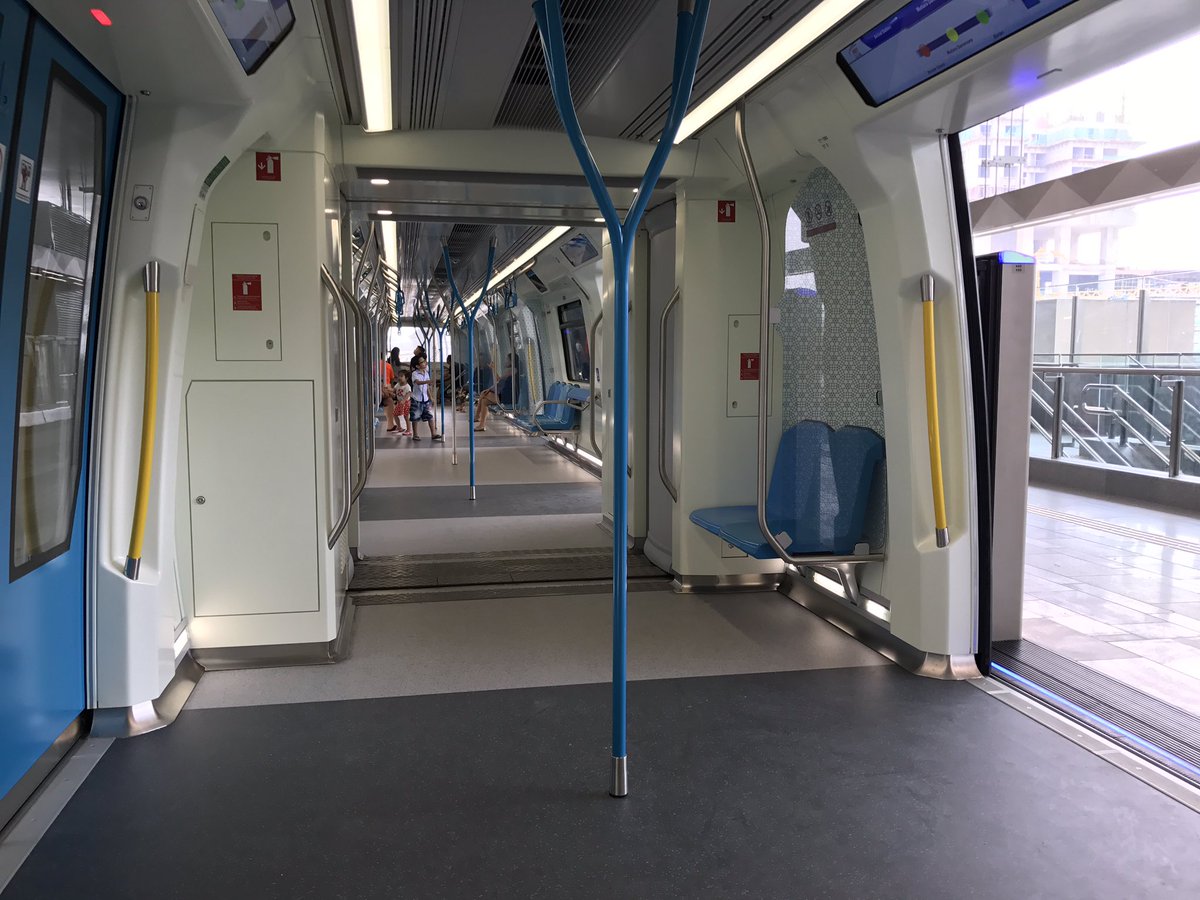
The upcoming MRT Line 1 of Kuala Lumpur City, Sungai Buloh – Kajang Line will be using Siemens Inspiro as its rolling stock with only 20 4-car trainsets configuration.


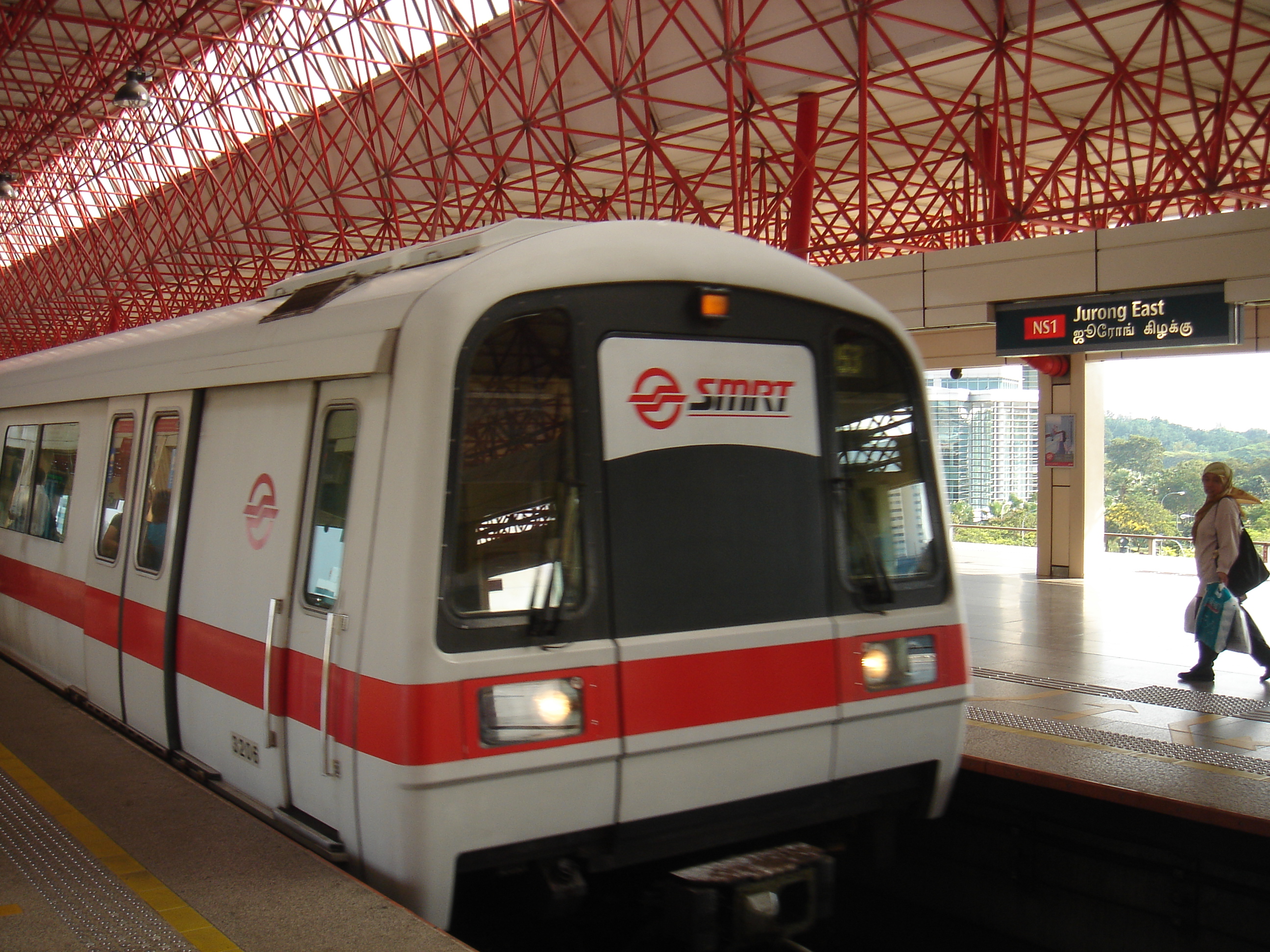
Capacity of the train is 300 passengers per car (approx. 1,200 passengers). In comparison of Singapore's North South Line  NSL  and East West Line  EWL  trains (Siemens C651), they carries around 1,920 passengers (320 passengers per car).


Thus, it clearly shows that SBK Line will only carry 93% of the SMRT train capacity.

Comparison table

6-car CSR Zhuzhou LRV trainsets ¹ – 1,308 passengers
4-car Bombardier Innovia Metro ART 200 ² – 944 passengers (236 pax per car)

MRT Corp Sdn Bhd will have to answer why are we only using 4-car trainsets and not 6-car as other major MRTs system are using and the reduced capacity is only marginally higher than a cheaper LRT system.

Remarks
¹ Sri Petaling Line
² Kelana Jaya Line

Sunday, November 20, 2016

MRT Sungai Buloh – Kajang Line starts on December 16

MRT Sungai Buloh – Kajang Line (SBK) will tentatively begin operation on December 16 for section between   SBK1  Sungai Buloh station and   SBK14  Semantan station.

The operator of the first MRT Line in Malaysia, Rapid Rail Sdn Bhd has announced the fare structure.

Rolling stock of MRT SBK Line

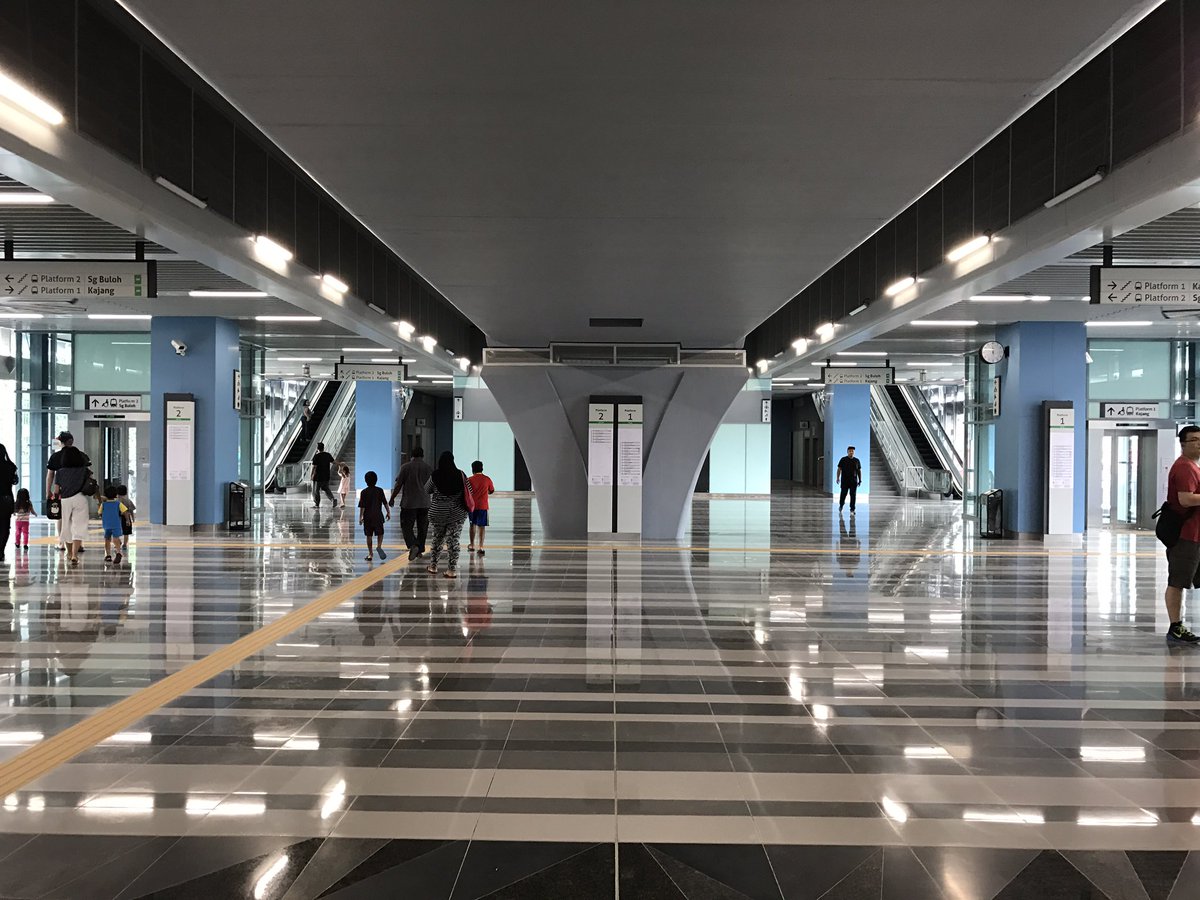
Concourse level of Taman Tun Dr Ismail station

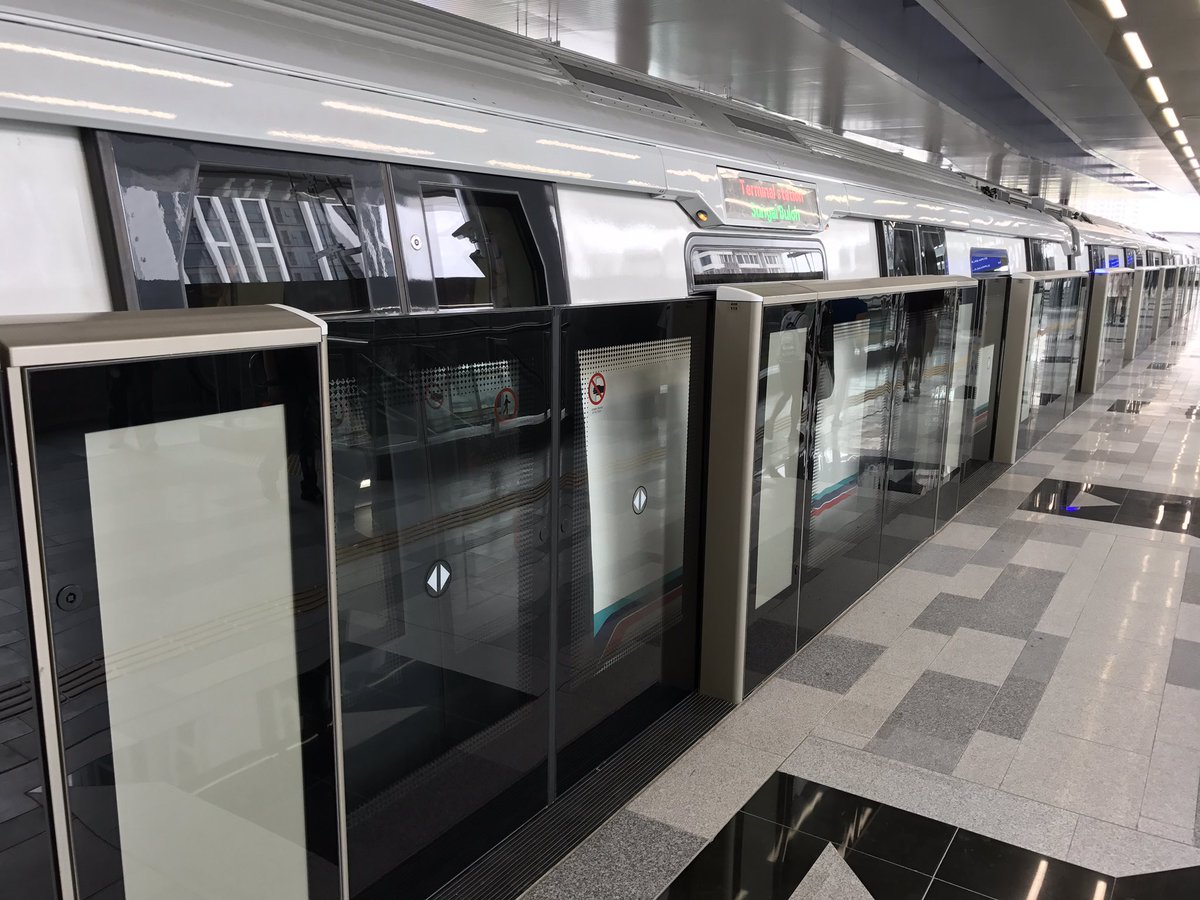
Train approaching the platform  

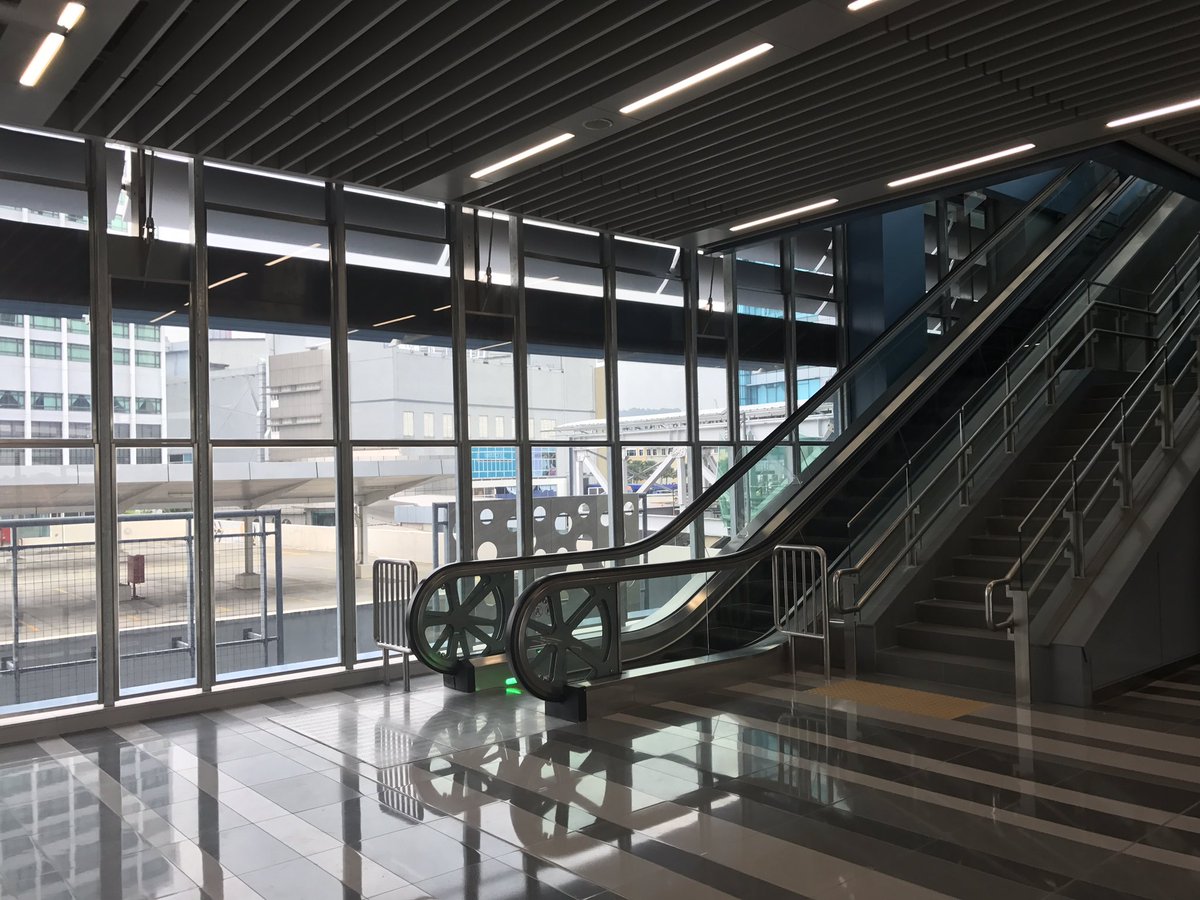
Glossy tiles with escalators and stairs to platform level


Key highlights
Phase 1 of MRT SBK is expected to be operational from 16 December 2016; covering 12 stations between Sungai Buloh and Semantan.

Phase 2 of MRT SBK, covering the remaining 19 stations between Semantan and Kajang, is scheduled for operations next July.

The fare structure has been approved by the Government and is based on the nominal flag fall and cascading rates for every four to five kilometres travelled – similar with the fare structure of the LRT and monorail services operated by Rapid Rail, a subsidiary of Prasarana Malaysia Berhad.


Wednesday, March 30, 2011

MRT proposal fails integration test

The current proposed location of the Bandar Utama MRT station is roughly between the LDP highway and the trees on the far right to the east of 1 Utama mall — Pictures by Choo Choy May.


Petaling Jaya, March 11 — Petaling Jaya Utara MP Tony Pua has questioned the planning of the proposed MRT system, saying that the lack of synergistic integration with bus terminals and other train lines could impair ridership targets and dispersal of commuters.

He noted that in Singapore, which has a widely-admired public transport system, 10 of the 17 MRT stations outside its Central Business District along the North-South line are integrated with bus terminals offering trunk, feeder and intra-town services.

“The proposed MRT system fails the integration test and poses the question as to whether the Gamuda-MMC driven project and designed alignment serves the interest of the public transport users or other hidden commercial interest,” said Pua in a press conference today.

He noted as an example that the Bandar Utama MRT station in Petaling Jaya, which is expected to serve 46,900 passengers daily, was not integrated with a growing bus hub located about 1km further west of the proposed station which is also near ample open land for expansion.


Pua claimed that the MRT proposal is being affected by commercial interests.The outspoken DAP MP also claimed that the ability of the Bandar Utama station to achieve its expected passenger numbers is also severely compromised by the fact that there are no public parking facilities with the exception of those in the 1 Utama shopping mall and One World hotel which are not meant for MRT commuters.

Pua also claimed that the MRT proposal, which has been touted as the country's biggest ever infrastructure project, is being affected by commercial interests and that the Land Public Transport Commission (SPAD) had appeared to take a backseat to the whole process.

“The BU MRT station is the perfect example of what is likely to go wrong when the country’s biggest public transport infrastructure investment is proposed and designed almost entirely by commercial parties with vested interest,” he said. “SPAD, which is meant to be the regulator to protect the interest of the public transport user in this case, only plays the bridesmaid’s role.”

Pua suggested that SPAD reviews the design, placement and overall public transport plans for the MRT stations to prevent any negative or undesirable outcomes.

The lack of seamless integration has been by far the biggest criticism of the city’s existing transit system, prompting some to describe it as an embarrassment to KL which has aspirations to become one of the top 20 most liveable and economically vibrant cities in the world.

Examples of existing integration failures include the Masjid Jamek interchange where commuters once had to exit the station and cross a busy road to change to another train line, and the Dang Wangi-Bukit Nenas “interchange” where commuters must exit the LRT station and walk about five minutes and buy another ticket in order to change to the monorail line.

Pua also noted that the proposed location of the KL Sentral MRT station is a “significant distance” away from the KL Sentral hub which currently houses the KTM, KTM Komuter, KLIA Transit, KLIA Express and Putra LRT services, and risks making the same mistake as the existing monorail station which is disconnected from the hub.

The Sungai Buloh-Kajang line alignment is currently on display for public viewing until May 14 at seven locations across the city — Kuala Lumpur City Hall, Petaling Jaya City Council, Shah Alam City Council, Selayang Municipal Council, Kajang Municipal Council, Bangsar LRT station and the SPAD office in Menara Dayabumi.

The public can provide their feedback on the project via email to feedback@kvmrt.com.my or through the SPAD toll-free line at 1-800-82-6868.


Ample land to the west of 1 Utama mall 1km from the proposed MRT station, where a large car park and a growing bus hub is located.

Tuesday, March 8, 2011

PKR calls for freeze on MRT plans

PKR calls for freeze on MRT plans (TMI)

By Clara Chooi
March 08, 2011

KUALA LUMPUR, March 8 — PKR demanded today that the government temporarily shelve its plans to build the Mass Rapid Transit (MRT) system pending the formation of a parliamentary select committee to oversee details of the project.


Party vice-president Nurul Izzah Anwar told a press conference in Parliament today that this was because the MRT, touted as the most expensive construction project in the country to date, was mired in too many questions regarding its cost estimate and the selection of its project delivery partner (PDP).

The Lembah Pantai MP questioned the government’s selection of Gamuda-MMC as the PDP, claiming that she had information that Scomi Group Berhad had proposed to construct a similar rail system at a lower cost.

“We heard from reliable sources that Scomi has given a proposal for a similar public transport project in Kuala Lumpur for RM25 billion.

“We ask the government to clarify and, if indeed this is true, to state why their proposal was rejected in favour of Gamuda-MMC,” she said.

Initial estimates from Gamuda-MMC have placed the cost of the three-line MRT system at a whopping RM36.6 billion, making it the most expensive construction project ever undertaken by the government.

According to regulators Land Public Transport Commission (SPAD), the project will be wholly funded by the government through a special purpose vehicle (SPV) to be set up by the Finance Ministry.

“We are aware that the MRT is the single largest public infrastructure project in Malaysia and while its realisation will bring benefits to Klang Valley residents, the project is still mired with too many questions.

“The cost of the MRT may even balloon to four times that of the (RM12.5 billion) Port Klang Free Zone project. Furthermore, there is the lack of integration plans to the present rail system,” said Nurul Izzah (picture).

She added that Gamuda-MMC’s experience was in “rail-based and tunnelling”, which was insufficient compared to Scomi.

“Scomi is one of only two integrated monorail system providers in the world to offer end-solutions including the design, fabrication and integration of the monorail rolling stock and related electromechanical systems,” she said.

She added that Scomi was also a Malaysian firm that has been successful in its bids for projects in the Middle East, South America and Asia Pacific.

“I am not promoting them here but if they are cheaper, why were they not considered by the government?

“Hence, on behalf of PKR, we want a stop-work order issued on the project and a parliamentary select committee formed to oversee details of the MRT.

“We want to make sure that the best proposal presented is the best one implemented,” she said.

The MRT system is an entry-point project identified for the Greater Kuala Lumpur/Klang Valley National Key Economic Area (NKEA) and aims to increase public transport modal share from 18 per cent to 40 per cent by 2020.

With the 40 per cent public transport modal share, the government hopes that at least four million trips of the estimated total of 10 million are made via public transport.

The remaining six million trips will continue to be made via private vehicles.

The Sungai Buloh-Kajang (SBK) line, the first of three lines in the project, is estimated to have a daily ridership of 442,000 passengers in its opening year, expected to be in 2016.

The SBK alignment map is up for public viewing until May 14 at seven locations across the city.

They are Kuala Lumpur City Hall, Petaling Jaya City Council, Shah Alam City Council, Selayang Municipal Council, Kajang Municipal Council as well as the Bangsar LRT station and the SPAD office in Menara Dayabumi.

The public can provide their feedback on the project via email to feedback@kvmrt.com.my or through the SPAD toll-free line at 1-800-82-6868

Thursday, February 24, 2011

MRT station spots not justified

MRT station spots not justified, claims research group

By Clara Chooi

February 23, 2011


A man inspects a map of the proposed MRT line displayed at the Bangsar LRT station. — Picture by Choo Choy May


KUALA LUMPUR, Feb 23 — The sites of the 35 stations proposed for the MassRapid Transit (MRT) have been called into question by a local research group, which claims regulators had not conducted the necessary traffic studies to justify their locations along the 51km line.

Association of Water and Energy Research Malaysia (Awer) president S. Piarapakaran told The Malaysian Insider that when preparing the Environmental Impact Assessment (EIA) for the MRT, the project consultants had failed to conduct a traffic modelling study, which he claimed was crucial to ensure the optimality of the project.

This includes measuring the present traffic flow at areas surrounding the proposed stations, an estimate of the likely increase in commuters flocking to the area to use the MRT, and a cautious estimate of how much congestion the system was likely to reduce, he added.

“They need to study the reason why the project regulators had decided to place the stations in those locations. Impact studies must be done on those in the surrounding areas affected by the MRT stations. This was not done.

“With the traffic analysis or modelling, they also have to determine the number of cars in the area at present and estimate the number of people who would come from outside the area to gain access to the station,” the Awer chief said.

Piarapakaran cited the example of the proposed park-and-ride station at Sungai Buloh where it was stated in the EIA that the station would have an estimated ridership of 2,400 people.

“But what they missed out is that there will likely be others from outside the area, perhaps from Rawang, who would want to use the station and will therefore clog the roads and increase the ridership. So their 2,400 estimate is likely inaccurate,” he said.

At the proposed elevated station along Jalan Damansara at Taman Tun Dr Ismail (TTDI), Piarapakaran predicted that without park-and-ride facilities, the station would likely increase congestion in the area.
“Sure, you may reduce the present traffic by taking people off the roads with the MRT but then they still need to get to the station.

“Also, you will attract more people to flock into the vicinity, even those who usually do not need to pass through the area. Then you have to take into consideration the feeder buses coming in. Already, the place is so badly jammed during peak hours,” he said.

He pointed out that even if commuters opt for the public bus feeder system to travel to the station, this would later result in the increased presence buses on the already choked Jalan Damansara during peak hours.
Piarapakaran then pointed out that in the LRT project, many stations became under-utilised due to poor planning and a lack of proper study on the purpose of the stations’ locations.

“Look at the Abdullah Hukum LRT station. From what I know, only TNB staff members use that station. Other than that, it is under-utilised,” he said.

In the first phase of its three-line proposal, the Klang Valley MRT will have 35 stations along its 51km line that stretches from Sungai Buloh to Kajang, with 13 proposed park-and-ride stations and four interchanges.

Eight of the stations will be underground as 9.5km of the line will be built under the capital city. Groundwork for the MRT is due to start this July 16 and will be completed in 2016.

Piarapakaran said that according to the declaration forms attached to the EIA report, a consultant registered in the area of traffic studies had been specifically tasked to carry out the traffic modelling but had not done so.

“I understand that the project proponent is now going to do the study but this does not make sense as the traffic modelling study must be included in the EIA in the first place,” he said.

Without the study, Piarapakaran said the EIA was merely a “literature review” of the MRT, an initiative touted as the most expensive construction project ever undertaken by the Malaysian government.

Estimated to cost over RM36 billion, the MRT is an entry point project identified for the Greater Kuala Lumpur/Klang Valley National Key Economic Area (NKEA) and aims to increase public transport usage from 18 per cent to 40 per cent by 2020.

The EIA is meant to look into all aspects of the project in order to determine its impact on the environment and the public.

Piarapakaran said that a traffic modelling study would also offer better accuracy to the EIA’s findings on the likely reduction of carbon emissions with the MRT through the reduced number of cars on the roads.

The EIA, he claimed, had only based its estimate on the reduction according to the number of vehicles the MRT system could remove from the roads.

“But again, without the traffic modelling study, the estimate may not even be accurate. They do not even know how many cars presently throng the streets in the areas, especially surrounding the stations, and how many more will use private vehicles to get to the stations.

“And if there is an increase in feeder buses to facilitate passenger movement, then this will add to the emissions,” he said.

The EIA report states that an estimated 132,860 MT/annum of carbon emissions would be avoided through the use of the MRT system following the shift of some 200,000 vehicle/trips from private transport to rail.

“But this is a conservative estimate as it was assumed that the average vehicle trip is only 10km,” the report said.

To calculate the net emissions avoided, the report factored in likely emissions that the MRT system itself would generate.

“The main source of emissions will be from power stations that generate electricity to be used by the trains and the stations.

“But it is not possible at this stage to estimate the amount of electricity that will be consumed at stations. This is also complicated by the fact that there will be other activities at the stations,” the report said.

The EIA estimated that a total of 98,459 MT/annum of carbon emissions would be generated due to electricity consumption at the MRT rail stations.
As such, the net emissions avoided according to the report were 34,400 MT/Annum.

Piarapakaran stressed that Awer was not against the MRT project as it viewed it as necessary to improve the country’s public transportation system and reduce energy usage through fuel.

Awer had conducted a financial modelling study on the project earlier and claimed that commuters would have to fork out an additional RM403.5 million in fuel cost in the first five years of the MRT’s operations.

Without having conducted the study, Piarapakaran predicted that the Department of Environment (DOE) was likely to approve the MRT project once public viewing on the document closes this March 15.

“Looking at things, it is likely that the DOE is going to approve the EIA for the MRT and the project will kick off in July,” he said.

The EIA report was prepared by ERE Consulting and involved 15 DOE-registered EIA consultants. It also included professional inputs from five other firms — Halcrow Consultants Sdn Bhd (traffic projections/MRT ridership), AECOM (alignment planning), Gamuda Engineering Sdn Bhd (geology and geotechnical), AJM Planning and Urban Design Group Sdn Bhd (land use) and Environmental Asia Sdn Bhd (erosion and sedimentation control plan).

“We are not against the MRT but what we are unhappy with is the way the project is being carried out without sufficient studies.

“For such an important, multibillion ringgit national project, the government needs to make sure that they take everything into consideration to make sure that it goes well and is cost-effective,” said Piarapakaran.

The proposed Klang Valley MRT alignment map is up for public viewing until May 14 at seven locations across the city.

They are Kuala Lumpur City Hall, Petaling Jaya City Council, Shah Alam City Council, Selayang Municipal Council, Kajang Municipal Council as well as the Bangsar LRT station and the SPAD office in Menara Dayabumi.

The public can provide their feedback on the project via email to feedback@kvmrt.com.my or through the SPAD toll-free line at 1-800-82-6868.

Tuesday, February 22, 2011

Buses cannot replace MRT

Buses cannot replace MRT, says EIA report
By Clara Chooi

February 22, 2011

KUALA LUMPUR, Feb 22 — An alternate bus system cannot replace the proposed Klang Valley Mass Rapid Transit (MRT) as it is likely to fail the desired passenger ferrying rate, according to the MRT’s key report.

The advocated Bus Rapid Transit (BRT) is seen to struggle to reach 30,000 passengers per hour in any direction as analysed by the controversial project’s Environmental Impact Assessment (EIA) report.

ERE Consultancy Group said in its EIA report that the bus solution would require 90-passenger vehicles to run uninterrupted nearly every 10 seconds — to match the MRT’s 30,000 passengers per hour per direction (PPHPD).

“The BRT proposals are not however long term solutions which can realistically offer sufficient capacity and level of service to deliver the expected demand levels and meet modal shift target,” the firm reported in Section 4 of its detailed EIA.

The EIA was prepared for the government’s multibillion ringgit proposed MRT project, which is touted as the most expensive construction project ever undertaken in Malaysia with initial estimates totalling over RM36 billion.

In the new rail system, the government aims to achieve a transport mode ratio between public and private transport of 40:60 from 18:82 due to an estimated increase from the present eight million trips made each day in the Kuala Lumpur metropolitan area to 10 million trips by 2020.

With the 40:60 transport mode ratio, it is targeted that at least four million trips are made via public transport by 2020 while the remaining six million trips are through private vehicles.

The EIA also explained that the mode share for rail use in the Klang Valley was expected to increase five-fold by 2020 from 400,000 trips per day in 2009 to 2 million trips in 2020.

It added that the MRT’s first line, the Sungai Buloh – Kajang route, is estimated to have a daily ridership of 442,000 passengers in its opening year, expected to be in 2016.

The EIA report was released on February 14 and is presently up for public viewing at Department of Environment (DOE) offices nationwide and several public libraries until March 15.

The Malaysian Insider reported yesterday a suggestion by transport advocates Association for the Improvement of Mass Transit or “Transit” that the ambitious MRT project could be replaced by the BRT.

The group’s chairman Muhammad Zulkarnain Hamzah said that a well-developed BRT could achieve the same aim as the MRT but at a fraction of the cost.

As an example, he said that the cost to construct 1km of an underground MRT rail could amount to RM1 billion while 1km of a BRT line would only cost up to RM20 million.

But the EIA found that the BRT, as one of the project options considered as an alternative to the MRT, was only viable to serve as an “intermediate mode” to facilitate the MRT.

This, the report said, was to help provide the needed momentum change towards public transport in a relatively quick and low cost manner for the later implementation of higher capacity models.

The report noted that in the government’s National Key Results Areas (NKRA), there were plans proposed for the establishment of new prioritised radial bus corridors, including the implementation of the BRT.

“The BRT is appropriate for development of public transport usage in corridors which currently have low public transport share.

“In the Kuala Lumpur context, the BRT should be considered as ‘intermediate mode’,” the report said.

It explained that using the BRT in Malaysia was not realistic as in order to serve the 30,000 PPHPD target, “30m bi-articulated” BRT buses running at 30-second intervals would be needed, as well as two dedicated bus lanes in each direction and a central station lane.

This, it said, meant that highways would have to be as wide as five lanes, much like the BRT system used in Bogota, Columbia.

When suggesting the BRT, Zulkarnain had cited figures from Bogota’s BRT as an example.

He told The Malaysian Insider that Bogota’s BRT buses record passenger travels of more than 20,000 PPHPD but if the BRT lanes were dedicated merely to cars, especially single occupancy vehicles, a maximum of only 2,000 PPHPD can be reached.

“It is not feasible to allocate this level of at-grade capacity in the city areas which the radial service must directly connect to,” the EIA report said.

It also said that the average speed of the BRT was considerably lower than the MRT, meaning that over longer corridors, travel time would be significantly longer.

In its report, ERE estimated that BRT buses, with an average passenger load of 90 passengers per car, travelled at a speed between 20 and 30 kilometres per hour (kph) while a four-carriage MRT, with an average passenger load of 250 per car, averaged between 35 and 70kph.

The EIA added that the quality of service with the BRT was not as high as the use of trains and commuters were likelier to opt for the MRT instead of hopping on the bus.

“The scenario of using bus services tightly packed with passengers (standing room only) as would be required at this level of demand is not likely to attract affluent car users onto public transport, which is an essential element to impact modal shift,” said the report.

In the same section of the EIA, ERE also listed street trams, the monorail system and the Light Rapid Transit (LRT) systems as other project options to the MRT.

The report noted that street trams was likely an inappropriate option as passenger demand would far surpass the mode’s capacity and land in the city centre was too constrained to facilitate the construction of tram lines.

Similarly, the report found that the city’s present monorail system would not adequately operate on the corridors that the MRT aims to serve.

For the LRT, the report said that the present rail system would not be able to facilitate an eventual capacity of 40,000 PPHPD, which is targeted with the MRT.

There was no reason given.

The report said that the MRT system was one of “high-capacity and high quality service”, with major interchange stations located in high-demand areas in the city centre.

“High accessibility to the surrounding land developments is essential to enable a shift from the current high proportion of private car usage,” said the report.

It added that the MRT, set to kick off construction in July, would form the backbone of the country’s transport system.

“This is part of an integrated network with seamless connectivity between supporting modes to make it the preferred mode, design will emphasise on its convenience, reliability, pleasant usage, affordability, accessibility and efficiency.

“And as such, the MRT system was deemed the most appropriate system for Kuala Lumpur,” it concluded.

In the first phase of its three-line proposal, the Klang Valley MRT will have 35 stations along its 51km line that stretches from Sungai Buloh to Kajang, with 13 proposed park-and-ride stations and four interchanges.

Eight of the stations will be underground as 9.5km of the line will be built under the capital city. Groundwork for the MRT is due to start this July 16 and will be completed in 2016.

The proposed alignment map is up for public viewing until May 14 at seven locations across the city.

They are Kuala Lumpur City Hall, Petaling Jaya City Council, Shah Alam City Council, Selayang Municipal Council, Kajang Municipal Council as well as the Bangsar LRT station and the SPAD office in Menara Dayabumi.

The public can provide their feedback on the project via email to feedback@kvmrt.com.my or through the SPAD toll-free line at 1-800-82-6868.